
For decades, metal refining has been defined by two dominant approaches: hydrometallurgy and pyrometallurgy. These methods have shaped how refining systems are designed, regulated by governments and permitted, and scaled up across the global mining industry, often treated as default pathways rather than deliberate choices. Such definition, however, no longer fully hold. Across a growing range of applications, refining is being evaluated under a different set of constraints, where feedstock variability has increased, environmental permitting has become more complex, and demand for ultra-high purity metals continues to rise across advanced manufacturing, defense, and energy systems.
Under these conditions and with rapidly increasing requirements for refined critical metals, a question arises as to how the conventional refining methods will be able to scale up to keep up with the material needs, without causing severe damage to the environment that can become a threat to our lives. These pressures are not theoretical but operational realities influencing project timelines, capital allocation decisions, and the ability of producers to align with increasing downstream demands.
In practice, these pressures are exposing structural limitations embedded within traditional refining methods. Smelting processes require significant energy input and are often tied to centralized infrastructure, limited flexibility, increasing capital intensity and intense pollution. Hydrometallurgical methods, while effective in many contexts, involve large scale reagent consumption, complex waste streams, and multistage processing that introduce toxins to the environment. As refining moves closer to the end user requirements, particularly where material specifications are increasingly strict and expensive for inventory, these constraints become more visible and more difficult to manage. The issue is not that the old methods cannot function, but that they were not designed for the level of control, responsiveness, and environmental performance now expected across modern industrial systems. As a result, operators are increasingly forced with balancing efficiency against compliance, scalability against environmental impact, and throughput against purity. These are trade-offs that become more pronounced as supply chains demand higher consistency and traceability across global markets and applications today.
These factors have led to renewed attention to alternative refining pathways that rely less on bulk thermal or chemical intensity and more on controlled, selective processes at the atomic level. Among these, metal vaporization refining technologies provide a fundamentally different framework. Instead of relying on large scale heat or solvents-based chemistry, these systems use controlled reactions to convert metals into volatile compounds, which can then be decomposed to produce highly pure refined metals. This enables precise separation, consistent quality, and closed loop operation, offering a level of control that aligns more directly with modern industrial requirements. While the underlying chemistry is long established, its modern industrial application reflects significant advances in engineering, containment, and process control, enabling these systems to operate reliably at scale while maintaining the consistency required for highly specific end uses across multiple sectors including defense, energy, and advance manufacturing environments.
-
Under these conditions and with rapidly increasing requirements for refined critical metals, a question arises as to how the conventional refining methods will be able to scale up to keep up with the material needs, without causing severe damage to the environment that can become a threat to our lives.
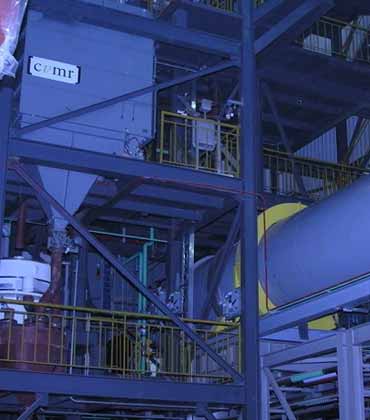
The carbonyl process, was developed more than a century ago and remains one of the most recognized examples of metal vapour refining. It applies to only 3 metals nickel, cobalt and iron. It demonstrated that metals could be purified through reversible chemical reactions under specific conditions. Building on this foundation, a limited number of organizations have developed broader vapour metallurgy platforms that extend these principles across a wider range of metals. Among them, CVMR Corporation has engineered vapor metallurgy and related processes into a closed loop system capable of producing metals at purities up to 99.9999 percent while maintaining precise control over containment and environmental performance. Beyond nickel, cobalt, and iron, the vaporization refining approach has been applied to other metals including lithium, copper, rare earth elements, and platinum group of metals, while also enabling direct formation into powders, coatings, and engineered shapes aligned with downstream specifications for high performance applications requiring consistency, traceability, and reliability.
Importantly, the value of such systems does not lie solely in the chemistry, but in how they integrate within the broader supply chain. Refining sits between resource extraction and end use manufacturing, and its effectiveness depends on how well it connects to both. Systems that can align feedstock characteristics, processing capability, and final product requirements within a single framework are better positioned to manage variability, maintain quality, and ensure continuity of supply. CVMR’s approach reflects this integration through a combination of proprietary process development, intellectual property, and access to in ground resources across multiple jurisdictions, linking upstream materials with downstream demand. This alignment reduces execution risk and allows refining performance to be managed not only at the plant level but across the entire value chain, enabling greater control over scalability, product consistency, and responsiveness to changing market demand in an increasingly complex global supply environment where reliability is critical for success.
Over several decades, this model has been applied across a range of industrial and institutional contexts. CVMR has supplied high purity metal products to organizations such as Department of Energy of United Stats, Departments of Defence of Unites Stats and Canada, United Stats Departments of Treasury, Oke Ridge National Lab, AMSE National Lab, NATO, NASA and more, where material performance, traceability, and reliability are non-negotiable. CVMR’s operations have extended across 23 countries, requiring adaptation to diverse regulatory environments, feedstock types, and application requirements. As global demand for critical minerals continues to grow, refining is becoming more central to industrial strategy, and the ability to produce materials that meet increasingly strict specifications while operating within tighter environmental frameworks which has increasingly become a defining factor in supply chain effectiveness. The shift is not about replacing existing methods entirely, but about recognizing that future refining will depend less on scale and intensity and more on precision, integration, and adaptability, where control over the process ultimately determines control over the outcome across increasingly demanding global systems.
Author bio: Kiana Kianara is Executive Vice President, Marketing & PR at CVMR Corporation, where she leads strategic communications within the mining and refining sector. As part of her role, she focuses on shaping how refining technologies are understood and positioned within the industry.