
THANK YOU FOR SUBSCRIBING
Metals And Mining Review: Specials Magazine
Spent catalyst recycling typically follows two primary routes: hydrometallurgical systems that extract select metals through chemical leaching, and pyrometallurgical methods that rely on high-temperature processing. While both approaches recover value, most processors focus on isolating a single high-value element, leaving behind residual waste streams that remain hazardous, regulated, and costly to manage. This gap defines the industry. AMG Vanadium operates on a fundamentally different premise — not just extracting value, but eliminating waste entirely. Part of the global AMG Critical Materials N.V. group — which includes three primary segments: AMG Lithium, AMG Vanadium, and AMG Technologies — the company has established itself as the global market leader and recognized gold standard in spent catalyst recycling. It offers a process and capability few others can match: near-total conversion of hazardous refinery waste into critical materials and value-added products. Eliminating Refinery Liability While Recovering Valuable Metals Spent catalysts are classified as hazardous waste, creating a long-term liability for refineries. That liability does not disappear once the material leaves the refinery site; it remains an environmental, regulatory, and financial obligation until it is fully treated. AMG addresses this through its proprietary V-Cycle® roasting and melting process. The system combines high-temperature roasting with controlled melting to break down complex residues and recover metals in a usable form. ...Read more
Top Mine Drilling and Blasting Company 2026
What role does innovation play in defining leadership within hard rock excavation industry? For twenty-five years, Capps Blasting has built its reputation on a simple conviction: innovation, not scale, defines leadership in hard rock excavation. Under CEO Joe Glassett, the company has intentionally remained a small regional operation, a structure that allows for hands-on problem solving, rapid experimentation, and tailored solutions that larger firms often cannot implement efficiently. This agility has become the cornerstone of Capps Blasting’s success, enabling it to design inventive techniques and tools that directly address client challenges. Capps Blasting operates as a comprehensive hard rock specialty excavation firm, delivering services that range from drilling and blasting to excavation, hauling, crushing, trenching, and rock hammering. Each project presents distinct challenges. A suburban trench near utilities requires different precision than aggregate production in a quarry. Rather than imposing a standard method, Capps evaluates each site to determine the most efficient and cost-effective approach. Blasting may provide the fastest and most economical solution in some cases, while specialized rock saws nearly eliminate risk and community disruption in others. The company’s size allows the team to adapt on the fly, applying the precise technique required for each unique situation. How does maintaining a smaller operational scale enhance flexibility and problem solving capabilities? Innovation drives every aspect of the company’s operations. Capps Blasting does not rely on artificial intelligence or flashy technology. Instead, its advances emerge from years of field experience and practical invention. Over the past two decades, the firm has developed more than a dozen proprietary tools that improve safety, accuracy, and efficiency in drilling and blasting. From engineered low-energy shots that control ground vibration to specialized loading systems that prevent overcharging, each tool responds to recurring challenges observed on the job. “We’re not the biggest, and we’re not the fanciest,” Glassett says. “We’re the ones focused on innovation and quality work, not quantity.” ...Read more
CXO INSIGHTS
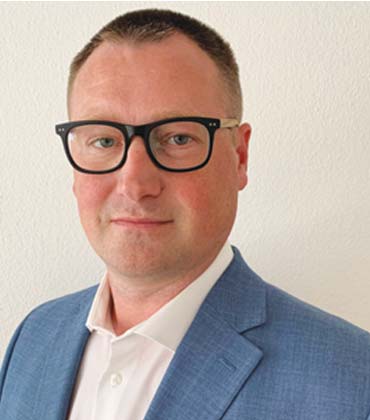
A Force Multiplier
Ryan Ortberg, Vice President and General Manager, Lhoist

Metallurgically Formed Niobium Carbide Composites for Corrosion, Erosion and Wear Protection
Leo Antony, Vice President - Advanced Technology, Kymera International ( NASDAQ: KYMR )

Mining Engineering
Garrick Goodheart, Environmental and Engineering Manager, Westmoreland Mining

The Convergence of IT with the Internet of Things Innovation
Andy Shang, Vice President of Engineering, Gold Medal Products

Navigating Cybersecurity in a Rapidly Evolving World
Casper Eloff, Head of Corporate Security, The Mosaic Company

Standardization without Uniformity in Enterprise EHS Programs
Daniel Maiden, EHS Director - Multi Sties, Lyndon Steel Company LLC

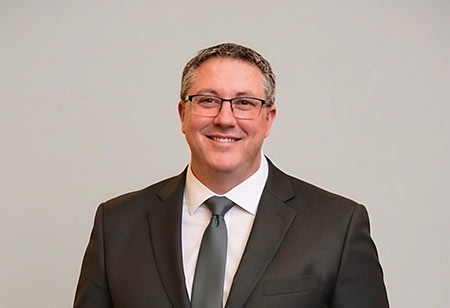
IN FOCUS

Spent Catalyst Recycling: Unlocking Value from Industrial Waste
Spent catalyst recycling gains momentum as industries recover valuable metals, reduce waste, and strengthen supply security through advanced processing methods.
Improving Fragmentation Outcomes through Advanced Blasting Design
Advanced blasting design uses data, precise timing and technology to control rock breakage, improve fragmentation consistency and enhance overall mining efficiency.
EDITORIAL
The New Equation of Resource Efficiency
The metals and mining industry is being reshaped by how effectively companies balance resource recovery, operational precision and safety with measurable industrial outcomes. This edition examines how circular processing models, fielddriven innovation and disciplined execution are redefining value creation across the sector.
AMG Vanadium, recognized as the Spent Catalyst Recycling Company of the Year 2026, sets a clear benchmark for circular resource management. The company’s proprietary V-Cycle process enables neartotal conversion of hazardous refinery residues into usable products, eliminating long-term waste liabilities while recovering critical materials. By transforming spent catalysts into ferrovanadium and other industrial inputs, AMG Vanadium strengthens supply chains for infrastructure and energy applications. It also reduces environmental impact, including significantly lower CO2 emissions compared to mining-based production. The company’s integrated operations and global partnerships demonstrate how recycling can operate at an industrial scale while delivering both economic and regulatory value.
Capps Blasting, named Top Mine Drilling and Blasting Company 2026, represents a different but equally critical dimension of industry performance. The company’s field-driven innovation model prioritizes precision, safety and efficiency through proprietary tools and adaptive methodologies. By tailoring techniques to site-specific conditions and minimizing manual handling, Capps delivers consistent outcomes in complex environments, proving that operational ingenuity and disciplined execution can outperform scale-driven approaches.
From a leadership perspective, Christopher Stebbins, Head of SHES, Specialty Mining Chemicals at Orica, emphasizes that sustainable safety performance is rooted in visible leadership, accountability, and frontline engagement, where risk management is embedded into daily operations. Complementing this, Brian Mekka, Director of Customer Experience at Charter Steel, highlights the role of structured feedback systems, data-driven decision-making, and consistent service standards in strengthening long-term customer relationships and operational alignment.
The underlying theme is clear: industry progress depends on disciplined systems, practical innovation and leadership accountability. We invite our readers to explore this edition and engage with the strategies shaping the future of metals and mining.
