
THANK YOU FOR SUBSCRIBING
Metals And Mining Review: Specials Magazine
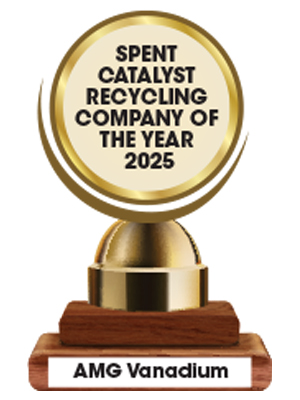
Environmental sustainability has shifted from an aspiration to an essential mandate. Setting the benchmark is AMG Vanadium, a global leader in the environmentally beneficial recycling of spent oil refinery catalysts and other vanadium-bearing wastes. By transforming hazardous materials into value-added products, it demonstrates that environmental responsibility is a powerful business opportunity, not a constraint. AMG Vanadium is a wholly owned subsidiary of AMG Critical Materials N.V. (AMS: AMG). AMG's mission is to provide critical materials and related process technologies to advance a less carbon-intensive world. AMG Vanadium has spent over two decades perfecting the art of recycling. This continuous effort—centered on transforming spent catalysts into valuable metals—has created a distinctive approach where sustainability and innovation align harmoniously. At the core of AMG Vanadium’s success is its proprietary V-CYCLE™ roasting and pyrometallurgical process, a state-of-the-art method that shatters traditional environmental compliance benchmarks. This process enables the company to achieve a remarkable 99 percent conversion of hazardous waste into saleable finished goods while eliminating process wastewater, reclaiming valuable metals and reducing CO2 emissions by 80 percent. These achievements have positioned AMG Vanadium as the industry’s benchmark, being the most environmentally compliant operation. “With no process wastewater and low CO2 emissions, we uphold our promise to protect the environment while delivering value to our refinery partners,” says Jane Neal, Senior Vice President of AMG Vanadium. AMG Vanadium recently doubled its operating capacity to lead the industry in scale and operational efficiency. This expansion exemplifies its mission to drive the circular green economy while delivering measurable environmental benefits. “When considering the scale of waste diverted from landfills, the impact becomes clear—AMG is driving meaningful change on a global scale,” says Tom Centa, President of AMG Vanadium, emphasizing the transformative impact of the company’s operations. ...Read more
Aluminum-Scandium Alloy Manufacturing Company of the year 2025
The demand for aluminum-scandium alloys has grown steadily due to their well-known benefits, including enhanced strength, improved corrosion resistance and lightweight properties. However, the adoption of aluminum-scandium alloys has been slow, particularly in the West, due to a lack of supply of reliable, domestically sourced aluminum-scandium master alloys. This is where FEA Materials stands out. “We have developed an innovative, efficient process that enables the production of high-quality, low-impurity, cost-effective aluminum-scandium master alloys, providing a reliable domestic source that addresses the critical need for Western sourcing,” says Eugene Prahin, CEO. The company is enabling industries to adopt aluminum-scandium alloys on a much larger scale, expanding their use beyond niche and high-end applications to more widespread, cost-sensitive sectors. Two major benefits FEA Materials offers to the industry are cost efficiency and Western sourcing. Traditional aluminum-scandium alloys have been prohibitively expensive, limiting their application to specialized areas. Its advanced production process significantly reduces costs, making aluminum-scandium alloys more accessible for aerospace, automotive, and defense industries. The company provides a much-needed domestic sourcing solution. For industries with concerns about sourcing from non-Western countries, its production within the U.S. offers a secure, reliable alternative, reducing the logistical complexities and geopolitical risks associated with importing materials. Scalable and Flexible Production Process One of the standout features of FEA Materials’ process is its higher concentration of scandium in the master alloy. While the industry standard is a two percent scandium concentration, it produces alloys with up to four percent, making it easier for manufacturers to achieve the desired alloy composition without excess binders. The higher concentration of scandium ensures cleaner alloys, as the company specializes in isolating scandium without introducing contamination from other rare-earth elements, a common issue in traditional production methods. FEA Materials uses a modular production system which offers several advantages over traditional large-scale manufacturing methods. FEA Materials production technology offers a better conversion process, resulting in higher efficiency and reduced energy consumption. The approach allows FEA Materials to scale production more easily, fulfilling both small and large orders without the need for minimum order requirements. The flexibility is particularly useful for R&D projects, demonstration phases, or industries with fluctuating demand....Read more

Market Intelligence Company Of The Year 2025

S&P Global Market Intelligence (NYSE: SPGI) is at the forefront of providing critical data and insights for the metals and mining industry. Through its robust database on Capital IQ Pro, the company delivers in-depth intelligence on global mining trends, company performance, and project evaluations. By offering essential tools for navigating market volatility, S&P Global empowers industry stakeholders with dependable metal price forecasts and comprehensive research. One of the key advantages of S&P Global Market Intelligence is its ability to provide a vast repository of mining data. The platform's interactive online database offers a detailed view of global mining activities, including insights on public and private mining companies, mineral discoveries, exploration, mine production, acquisitions, and metal price projections. By leveraging these insights, mining companies, investors, and analysts can develop effective strategies for mining investments and operations. The metals and mining sector is inherently cyclical and influenced by various factors, including geopolitical developments, economic trends, and technological advancements. S&P Global Market Intelligence helps industry players stay ahead of these changes by offering real-time market data and expert analysis. This allows companies to make informed decisions that enhance operational efficiency and long-term sustainability. S&P Global Market Intelligence recently published a report analyzing the timeframes for mine development from discovery to production in the U.S., comparing them with global peers. The study revealed that the U.S. has some of the longest mine development times worldwide, averaging nearly 29 years. This lengthy timeline highlights the complexities and regulatory challenges facing the U.S. mining sector. Compared to other countries, where the development process is often more streamlined, the prolonged timeline in the U.S. underscores the need for policy reforms and strategic planning to expedite the mining approval and operationalization processes. By offering these insights, S&P Global Market Intelligence plays a crucial role in helping mining companies and policymakers understand the barriers to efficient mine development and work towards solutions that ensure a stable and sustainable supply of critical minerals. ...Read more
CXO INSIGHTS

Metallurgically Formed Niobium Carbide Composites for Corrosion, Erosion and Wear Protection
Leo Antony, Vice President - Advanced Technology, Kymera International ( NASDAQ: KYMR )

Innovating Metal Performance and Manufacturing for Continued Mining Excellence
Jian Zhou, Ph.D., Corporate R&T Metallurgy Manager, Cummins [NYSE: CMI]

How to Make the Most of your Process Failure Mode and Effects Analysis
Monte Heisler, Director, Manufacturing Quality, North American Stamping Group

Redefining the Automotive Sector with Innovative Manufacturing Systems
Trent Randles, Engineering & Operational Excellence Manager, BorgWarner

Showcasing Leadership in Spent Catalyst Recycling
Tim Ingle, Senior Vice President of Precious Metal Services and Recycling at BASF


IN FOCUS
EDITORIAL
Building a Greener Future
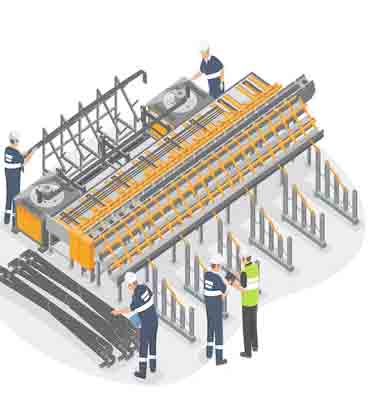
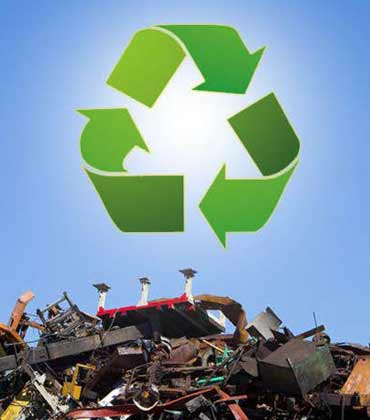
Spent catalyst recycling and aluminum-scandium alloy manufacturing represent two critical areas of industrial sustainability and advanced material development. Both fields embody the shift toward efficient resource utilization and enhanced material performance, addressing both environmental concerns and the growing demand for high-performance alloys.
Spent catalysts, which are used extensively in the petrochemical, refining, and chemical industries, accumulate over time and require disposal or reclamation. These materials often contain valuable metals such as platinum, palladium, nickel, and rare earth elements, making their recovery not only economically viable but also environmentally imperative. Recycling spent catalysts reduces reliance on primary resource extraction, minimizes hazardous waste disposal, and lowers the carbon footprint associated with metal mining and processing. Advanced hydrometallurgical and pyrometallurgical techniques have been developed to efficiently extract these valuable metals, ensuring their reintegration into industrial supply chains.
Parallel to this, the aluminum-scandium alloy industry exemplifies the impact of advanced materials on modern engineering. Scandium, a rare but highly beneficial element, significantly enhances the mechanical properties, corrosion resistance, and weldability of aluminum alloys. These alloys are highly sought after in aerospace, automotive, and defense applications due to their superior strength-to-weight ratio and enhanced durability. However, the limited natural supply of scandium poses a challenge to its widespread adoption. To address this, research has intensified into alternative sources, including the recovery of scandium from industrial by-products such as red mud, a waste product from alumina refining. By incorporating scandium extracted from secondary sources, the industry moves toward a more sustainable production model while reducing environmental waste.
The convergence of spent catalyst recycling and aluminum-scandium alloy manufacturing highlights the broader theme of circular economy principles in industrial processes. Efficient recovery of valuable elements from waste streams not only mitigates environmental impact but also supports technological advancements by ensuring a stable supply of critical materials. As industries strive for greater sustainability and resource efficiency, the integration of these practices will be crucial in fostering innovation, reducing dependency on virgin materials, and enhancing the resilience of global supply chains.
